Blog

Your blog category

Blog

Lighting as Wellness Tech: The Science Behind Human-Centric Lighting Systems

For most of the last century, lighting design answered one question: Is the room bright enough? In 2026, that question will have changed. The people specifying lighting for Indian homes and workspaces are now asking a different one, is this light helping the people under it feel better, sleep better, and function better? That shift has a name: human-centric lighting, or smart lighting solution design built around the biology of the people who use the space, not just the aesthetics of the room. It is one of the fastest-growing categories in residential and commercial automation, and it is quietly becoming one of the most requested upgrades we see at Immersive Technologies India. The Biology Nobody Designs For Every human being runs on a roughly 24-hour internal clock, the circadian rhythm that governs when we feel alert, when we feel sleepy, when our body releases melatonin, and even when our metabolism is most active. This clock isn’t set by a wristwatch. It’s set by light. Specifically, it’s set by a photoreceptor in the eye called the ipRGC (intrinsically photosensitive retinal ganglion cell), which doesn’t process light for vision, it processes light for timing. Cool, blue-enriched light in the morning suppresses melatonin and signals “be alert.” Warm, amber-toned light in the evening allows melatonin to rise and signals “wind down. ” A conventional lighting installation, one warm-white color temperature, and one brightness level, on from dusk to bedtime, ignores this system entirely. It floods a bedroom with the same 3000K glow at 7 AM and 11 PM, working against the body’s clock both times. This is the gap human-centric lighting is built to close. What a Human-Centric Smart Lighting Solution Actually Does A properly engineered smart lighting solution doesn’t just dim and brighten on a timer. It shifts both intensity and correlated color temperature (CCT) across the day, mimicking the arc of natural daylight: Morning (6–9 AM): Cooler, higher-CCT light (5000K–6500K) at higher lux levels to suppress residual melatonin and support alertness particularly valuable in Indian homes with limited direct morning sunlight due to high-rise shading or pollution haze. Midday (10 AM–4 PM): Bright, neutral white (4000K–4500K) that supports focus, critical for home offices and study spaces, a segment that has only grown since hybrid work became permanent for many Gurugram and Noida households. Evening (5–8 PM): A gradual shift toward warmer tones (2700K–3000K) as intensity tapers, easing the transition toward rest. Night (post 9 PM): Very low-lux, amber-dominant light (under 2200K) in bedrooms and bathrooms, which allows melatonin production to proceed largely undisturbed. This isn’t a set of manual scene changes. It runs on the same automation logic already familiar in smart home control, occupancy sensors, scheduled routines, and app-based overrides layered onto a lighting protocol capable of full tunable-white or RGBW output. Why This Belongs in the DALI vs. 0-10V vs. Smart Bulb Conversation Human-centric lighting isn’t a separate product category, it’s a design layer that sits on top of the protocol decision most homeowners are already weighing. DALI systems are the most capable here, since DALI type 8 devices are purpose-built for tunable white and color control with individually addressable, feedback-capable fixtures and are the standard choice for villas, large-format homes, and premium developments where lighting is designed room-by-room. 0-10V dimming can support tunable white with the right driver architecture, but typically at a coarser control resolution, a reasonable middle ground for retrofit projects with budget constraints. Smart bulbs (Wi-Fi or Zigbee-based) bring human-centric lighting within reach of apartment dwellers who can’t rewire, a fast-growing segment across Delhi NCR’s high-rise inventory, where full DALI retrofits aren’t always feasible. The right choice depends on whether the project is new-build or retrofit and how granular the control needs to be a conversation worth having before fixtures are ordered, not after. The Measurable Case: Sleep, Focus, and Energy The wellness argument isn’t speculative. Occupational health research has consistently linked circadian-tuned lighting in offices to improved reported alertness and reduced afternoon energy dips, and residential circadian lighting has shown measurable improvements in sleep onset time when evening blue-light exposure is reduced. For Indian households increasingly conscious of screen-driven sleep disruption, smartphones, laptops, and late-night OTT viewing are now a near-universal evening habit, a bedroom lighting system that actively counteracts blue-light exposure rather than adding to it is a genuinely practical wellness intervention, not just a luxury feature. There’s an efficiency dividend too. Occupancy-based dimming and scheduled CCT shifts reduce the tendency to run lights at full brightness around the clock, trimming electricity consumption in a country where power tariffs continue to climb across NCR discoms. Designing It Into a Home, Not Bolting It On The homes and offices that get the most out of human-centric lighting are the ones where it’s planned at the design stage alongside layout, natural light access, and the rest of the automation ecosystem (climate, security, AV) rather than retrofitted room by room after the fact. Tunable-white fixtures, sensor placement, and scene programming all work better when they’re part of one coordinated system rather than a patchwork of add-ons. At Immersive Technologies India, this is where we spend most of our design conversations with clients, not just “How bright should this room be?” But “How should this room’s light change across a day to actually support the people living in it?” That’s the real promise of a smart lighting solution in 2026: lighting that works with human biology instead of ignoring it. Immersive Technologies India designs and integrates smart home, home theater, AV, security, and BMS systems across Gurugram, South Delhi, and Noida. To discuss a human-centric lighting design for your home or workspace, get in touch with our team.     
Blog

Smart Lighting Solutions as a practical strategy for energy savings

Does lighting automation actually save money, or is it just a gimmick? (India, did the math.) Electricity bills come up in every group chat lately, especially among those in the NCR. Usual suggestions: switch to LEDs, get a 5-star AC, maybe solar if you own the place. Nobody ever mentions lighting automation, and I get why most people think “smart lighting” just means changing your bulb to purple for a party from an app. That’s not really what I’m talking about. I work in this space (home automation/AV, India market), so I figured I’d actually lay out the numbers instead of just saying “yeah, it helps.” The waste isn’t the bulbs, it’s the habits Lighting was never the biggest part of anyone’s bill, AC and water heating crush it. But it’s the most wasted part because it’s almost always forgotten, not the equipment. Passage light is on all day. Guest room, nobody checks. Outdoor lights on a flat 6 pm-6 am timer in June when it’s still bright at 7 pm. A motion sensor in a passage just kills that problem outright. A light sensor near a window dims/cuts the fixture when there’s enough daylight relevant for most of the year here, not just two months. Outdoor lighting tied to an actual sunset/sunrise clock instead of a dumb timer stops burning power on long summer evenings. Dimming is the most underrated part, honestly. Most homes run lights at full brightness 24/7 regardless of need, and LED draw scales pretty closely with brightness, so even modest dimming during low-activity hours adds up. Actual numbers, not rounded-up-to-sound-good numbers 3BHK, ~1800 sq ft, standard LEDs: lighting is usually 8-12% of the monthly bill. Add occupancy sensing, daylight response, and real scheduling in common areas/passages/outdoors, and you’re cutting that lighting slice by 25-35%. Not the whole bill, just that slice. On a ₹6-8k bill, that’s roughly ₹150-300/month. Not huge on its own, I won’t pretend otherwise. But a decent DALI or KNX setup lasts 10+ years easily, so over that time it actually offsets a real chunk of what you paid upfront. Villas see bigger numbers because outdoor/landscape lighting is the worst offender for fixed-timer waste, boundary walls, driveways, and RWA common areas. Cost-wise Few rooms (passages, bathrooms, store room), basic occupancy + scheduling, retrofit, no rewiring: ₹15-25k Full setup daylight harvesting, DALI dimming on living/dining, astronomical clock for outdoor for a 3BHK: ₹80k-1.5L depending on circuits Villas with landscape lighting + BMS integration: ₹3-5L, but at that point, the same sensors are also triggering AC scheduling, so the case gets stronger Smart switches vs DALI Basic Wi-Fi switches = fine for on/off and schedules, but no real dimming precision. DALI is built for proper commercial-grade dimming, is individually addressable, way better daylight response. Single room → smart switches are fine. Whole home/villa → DALI pays back faster because there’s more load to actually optimize. The part that’s not a fun sell If your AC and geyser are unmanaged, lighting automation alone won’t move your bill much. Those two dwarf lights. This is one piece of a bigger strategy, not a magic fix. Where it actually shines is in common areas, outdoor zones, passages, and predictable waste that’s easy to kill. TLDR: Not going to replace solar or AC optimization as your main move, but it’s low-disruption, retrofit-friendly, and pays back in under 5 years in most setups. The biggest mistake is people treating it as a luxury thing instead of what it actually is, on paper, a small but real saving. Curious what others are actually running (DALI/Zigbee/basic switches) and what dent it’s made on your bill. Real numbers > spec sheets.

Blog

Distributed Audio vs. Zone-Based Audio — What’s the Difference and Why Does It Matter?

I’ve been in the AV and home integration industry for over a decade, and one question comes up on almost every single project: “Can we have music playing in different rooms?” The answer is always yes. But how you get there makes all the difference, and most homeowners, and even some builders, don’t realize there are fundamentally two different approaches to achieving it. Let me break it down. What Is Distributed Audio? Distributed audio is exactly what it sounds like, a single audio source (or multiple sources) distributed across your entire home through a centralized system. Think of it like a hub-and-spoke model. One central amplifier or matrix system pushes audio out to speakers installed in every room, hallway, patio, or garage you want covered. The key characteristic? Everything is managed from one place. You control volume, source selection, and zones from a single app, touchscreen, or control panel. High-end systems from brands like Sonos, Crestron, Savant, or Autonomic make this seamless, allowing you to play the same song throughout the entire home or different content in different areas, all from one interface. Best for: Larger homes, luxury builds, hospitality environments, and anyone who wants a truly polished, whole-home audio experience. What Is Zone-Based Audio? Zone-based audio is a subset of distributed audio, but the distinction matters. In a zone-based system, your home is divided into specific “zones,” and each zone can be independently controlled. The living room is one zone. The master bedroom is another. The backyard is a third. Each zone can have: Its own volume level Its own audio source Its own on/off control So while your kids play music in the basement, you’re listening to a podcast on the patio, and the kitchen is completely silent, all simultaneously, all independently. Best for: Families with different listening habits, open-plan homes where sound bleeds between spaces, and projects where flexibility is the top priority. So What’s the Actual Difference? Here’s where I see the most confusion on job sites and in client meetings: Distributed audio refers to the infrastructure, the wiring, amplification, and signal routing that make whole-home audio possible. “Zone-based audio” refers to the control logic, how that infrastructure is divided, and independently managed. In practice, most modern whole-home audio systems are both. But the way a system is designed and installed determines how flexible and reliable the zones will actually be. A poorly planned distributed system will give you zones that bleed sound into each other, volume imbalances between rooms, and a control experience that frustrates more than it impresses. This is why pre-wire planning, done before a single wall is closed, is absolutely critical. Once the drywall goes up, your options shrink dramatically. The 3 Questions I Ask Every Client Before Designing an Audio System 1. How many people will be using this system daily, and do they have different tastes? If yes, zone independence becomes a priority over simplicity. 2. Do you entertain frequently? If yes, whole-home synchronization, the ability to play one source everywhere, becomes essential. Party mode is a real feature, and clients love it. 3. What’s your long-term vision for this home? A system designed only for today will frustrate you tomorrow. I always design for a family’s life 5–10 years out, not just their needs at move-in. The Bottom Line Distributed audio gives your home a voice. Zone-based control gives every person in it their own. The best systems do both, seamlessly, reliably, and in a way that your family actually uses every single day. Because the most expensive audio system in the world is worthless if it’s too complicated to turn on. If you’re a builder, architect, or homeowner planning a new build or renovation, have the audio conversation before the framing conversation. The infrastructure decisions made early in construction determine everything about what’s possible later. Have you ever moved into a home where the audio system was an afterthought? Or worked on a project where the pre-wire planning made all the difference? Drop your experience in the comments, I’d love to hear it.

Blog

Future-Proofing Luxury: The Definitive Guide to Open Automation Ecosystems in India

In the rapidly evolving landscape of smart home automation, the greatest risk isn’t choosing the wrong brand, it’s choosing a system that traps you in a “walled garden.” For the modern homeowner in regions like Gurgaon and Delhi NCR, where luxury real estate is reaching new heights of sophistication, a true home automation solution must be more than just a collection of gadgets. It must be a fluid, invisible infrastructure that adapts to your life, rather than forcing you to adjust to its limitations. At Immersive Technologies India, we believe that the pinnacle of luxury is freedom. Fluency, the capacity to connect the world’s most esteemed automation protocols, including Crestron, KNX, and Lutron, forms the basis of our engineering philosophy. By creating a unified, hardware-agnostic environment, we ensure your investment is flexible, interoperable, and built to evolve. The Architecture of Choice: Understanding the Big Three A premium smart home rarely relies on a single manufacturer. In the same way a master chef uses different tools for different tasks, a high-end automation architect selects specific protocols for their unique strengths. 1. Crestron: The Orchestrator of Complexity Crestron remains the undisputed gold standard for enterprise-grade control systems. Within our ecosystem, we utilize Crestron as the “central nervous system.” It excels at handling high-bandwidth tasks that other systems might struggle with, such as Private Cinema Management: Seamlessly switching between 8K sources, immersive audio processors, and anamorphic lens controls. Multi-Room Audio-Visual Distribution: Ensuring that high-fidelity sound follows you from the lounge to the terrace without a millisecond of latency. Custom User Interfaces: Providing a bespoke touch-screen experience that reflects the aesthetic of your home’s interior design. 2. KNX: The Global Language of Infrastructure If Crestron is the brain, KNX is the backbone. As a decentralized, non-proprietary international standard (ISO/IEC 14543), KNX is the world’s most reliable protocol for building control. Decentralization: Unlike “hub-based” systems, if one KNX device fails, the rest of the house continues to function. This is critical for essential services like HVAC and security. Interoperability: With over 500 manufacturers producing KNX-certified products, you are never beholden to a single brand. You can mix a German sensor with an Italian switch and a French actuator, and they will speak the same language fluently. Longevity: KNX devices are designed for a 20+ year lifespan, making them the most sustainable choice for smart home automation. 3. Lutron: The Master of Atmosphere Lighting is the soul of interior design. When it comes to the physics of dimming and the elegance of window treatments, Lutron is peerless. Precision Dimming: Lutron’s patented technology enables smooth, flicker-free dimming down to 0.1%, crucial for setting the mood in a gallery or master suite. Motorized Shading: From Palladiadiom to Sivoia, Lutron shades operate with near-silent precision, aligning perfectly to the millimeter across a sprawling glass facade. Aesthetic Harmony: Their keypads are not just controls; they are design statements available in finishes that complement the most luxurious interiors. Breaking the Cycle of Obsolescence The most common concern we hear from clients is the fear of technology becoming “outdated” within five years. In the world of mass-market consumer electronics, “planned obsolescence” is a business model. At Immersive Technologies India, we view it as a failure of design. Our strategy for home automation focuses on three core principles to ensure your home remains cutting-edge for decades: Modular Flexibility We design with a “decoupled” approach. We separate the infrastructure (cabling and protocols like KNX) from the user interface (touch screens and apps). If a new, revolutionary control interface is released in 2030, we simply update the software or replace the touch panel without needing to tear open your walls or replace your lighting controllers. Protocol Translation We utilize advanced “gateways” that allow different systems to communicate. For example, a motion sensor on the KNX bus can tell the Lutron lighting system to activate a “pathway” scene, while simultaneously telling the Crestron system to pause the music in the room you just left. This cross-platform fluency means your home is never “locked” into a specific vendor’s software updates. Scalability for Tomorrow A home is a living entity. You may start with lighting and climate control today, but decide to add EV charging integration, solar energy management, or AI-driven security monitoring in three years. Because our systems are built on open global standards, adding these layers is a matter of integration, not reconstruction. Engineering for the Indian Context: Reliability in Gurgaon and Delhi NCR Implementing global standards like KNX and Crestron in India requires a deep understanding of local challenges, from voltage fluctuations to extreme climatic conditions. Climate-Adaptive Automation: In the intense heat of a Delhi summer, our systems don’t just turn on the AC; they manage the entire thermal envelope. By integrating Lutron shades with KNX temperature sensors, your home can automatically lower the blinds on the west-facing windows as the sun moves, significantly reducing the load on your HVAC system. Power Management: We integrate sophisticated power conditioning and backup logic into the automation core. If the power switches to a backup generator, the system can automatically shed non-essential loads (like decorative water features) while keeping security and essential lighting active. The Immersive Technologies Difference: From Vision to Reality Designing an ecosystem that works across Crestron, KNX, and Lutron requires a rare blend of electrical engineering, software development, and aesthetic sensitivity. Our process ensures that the complexity remains under the hood, providing you with a simple, intuitive experience. The Discovery Phase Every project begins with understanding how you live. Do you host large gatherings? Is your home a sanctuary for relaxation? We map these requirements to the technical capabilities of our partner ecosystems. Technical Documentation We provide exhaustive documentation, from cable schedules to logical flowcharts. This transparency ensures that your system is “open,” meaning it can be serviced or expanded by any certified professional in the future, giving you total ownership of your home’s intelligence. Post-Installation Support Technology evolves, and so do your preferences. Our systems allow for remote diagnostics and updates, ensuring that

home theater installation
Blog

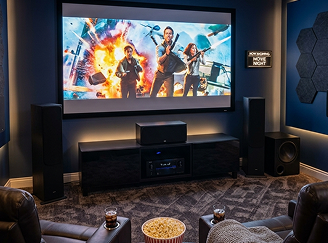
Design Your Perfect Movie Night Explore Home Theater Systems in Gurgaon.

The silver screen’s magic is in the roar of engines, the wind’s whisper, and visuals so sharp they transport you to another world. In the bustling heart of Gurgaon, where high-rise living meets a desire for luxury, the ultimate “stay-at-home” experience is no longer a dream—it’s a professional standard. If you are looking to elevate your weekend relaxation, here is everything you need to know about planning a world-class home theater installation. Why Move Beyond the Soundbar? While a basic television and soundbar might suffice for the news, a true cinematic experience requires a dedicated ecosystem. Professional home theater installation in Gurgaon focuses on several key pillars: Acoustic Treatment: Gurgaon’s modern apartments often feature large glass windows and hard surfaces. Professionals use acoustic panels and bass traps to ensure sound doesn’t bounce, providing crystal-clear dialogue and tight, punchy bass. Immersive Audio: Moving from a 5.1 setup to a Dolby Atmos configuration adds “height” to your sound. Imagine the sound of rain falling from your ceiling or a jet flying directly over your head.   Visual Precision: Whether it’s an 8K laser projector or a massive MicroLED display, professional calibration ensures that colors are accurate and black levels are deep, exactly as the director intended. Trends Shaping Gurgaon Homes in 2026 The landscape of home entertainment is evolving. Here are the top trends currently requested by homeowners in DLF Phase 5, Golf Course Extension, and beyond: Invisible Integration: No one wants a mess of wires. Modern installations feature “hidden” speakers that reside behind the drywall or within the ceiling, ensuring the technology “disappears” when not in use.   Human-Centric Lighting: Smart lighting isn’t just about dimming the lights for the movie. Integrated systems can sync with your screen to expand the colors of the movie onto your walls or adjust your room’s color temperature to match your circadian rhythm. Smart Control Systems: A single touch on a tablet or a simple voice command should dim the lights, lower the projector screen, and start the movie simultaneously.   Choosing the Right Partner: Immersive Technologies India A home cinema is an investment in your lifestyle, and the technical complexity requires an expert hand. From wiring infrastructure to the final audio calibration, the quality of the integrator makes all the difference. Immersive Technologies India stands out as the best integrator in Gurugram. Known for their “human-centric” approach, they don’t just sell equipment; they design experiences. Whether you are looking for a private dedicated cinema room or a seamless media lounge that blends into your living area, their expertise in luxury home automation and high-end audio-visual solutions is unmatched in the region.   3 Tips for Your First Consultation Before you call in the pros for your home theater installation, consider these three factors: Room Layout: Identify if you have a dedicated room or if the system will be in a multi-purpose living area. Seating Distance: Your screen size should be determined by how far you sit from it to avoid eye strain. Future Proofing: Ensure your wiring (CAT6/HDMI 2.1) can handle the 8K and 12K content of the future. Conclusion Your home should be your sanctuary. By investing in a professional home theater installation, you aren’t just buying electronics; you’re creating a space for family bonding, immersive gaming, and unforgettable movie nights. Ready to bring the cinema home? Reach out to the experts at Immersive Technologies India and start designing your dream setup today.

Blog

Discover the Best Audio Visual Company in Gurugram for Stunning Events.

In the bustling corporate and social hub of Gurugram, the difference between a “good” event and an “unforgettable” one often comes down to one thing: the sensory experience. Whether you are hosting a high-stakes board meeting in Cyber City or a luxury gala in a Golf Course Road residence, the quality of your sound and clarity of your visuals are non-negotiable. Finding the right partner for audio-video installation services can be overwhelming, but choosing a local expert ensures that your technology is as seamless as your hosting. Why Professional Audio-Video Installation Services Matter Standard “plug-and-play” setups often fall short in complex environments. Professional integration ensures that every component—from the acoustics of the room to the brightness of the displays—is calibrated for maximum impact. Clarity & Precision: High-definition visuals and crisp audio ensure your message isn’t lost in translation. Aesthetic Integration: Modern AV solutions should be “invisible,” blending into the architecture without messy cables. Reliability: Professional grade equipment reduces the risk of technical glitches during critical moments. Key Features of a Top-Tier AV Integrator When searching for the best audio-video installation services in Gurugram, look for a provider that offers more than just hardware. You need a partner who understands the “why” behind the technology. Custom System Design: Every space is unique. The best companies conduct site surveys to map out sound coverage and viewing angles. Smart Automation: Integration with lighting and climate control allows you to manage the entire ambiance of your event from a single interface. Future-Proofing: Technology moves fast. Your integrator should install systems that are scalable and compatible with upcoming software updates. The Best in the Business: Immersive Technologies India If you are looking for the gold standard of integration in Gurugram, Immersive Technologies India stands out as the premier choice. Known for their human-centric approach, they don’t just install speakers and screens; they create environments that elevate the human experience. As the leading integrator in the region, Immersive Technologies India specializes in: High-End Home Cinemas: Bringing the theater experience to your private residence with Dolby Atmos and 4K projection. Corporate Boardrooms: Streamlining communication with zero-latency video conferencing and smart acoustics. Luxury Retail & Hospitality: Creating immersive atmospheres that captivate customers the moment they walk in. Elevate Your Next Event Gurugram is a city that demands excellence. Don’t let poor sound or pixelated visuals hold your event back. By choosing professional audio-video installation services, you ensure that your technology works for you, not against you. For those who refuse to settle for anything less than perfection, Immersive Technologies India provides the expertise, local knowledge, and technical sophistication required to bring your vision to life. Ready to transform your space? Whether it’s a corporate takeover or a private celebration, the right AV setup is your most powerful tool. Invest in quality, and let the technology disappear into the experience.

Blog

⁠Why Every Modern Home in Gurugram Needs Home Automation Services.

Gurugram’s skyline is a testament to rapid urbanization and luxury living. As the city evolves into a global hub for tech and finance, our homes are also undergoing a massive transformation. The days of manual switches and standalone appliances are fading, making way for the integrated Home Automation Solution. If you are living in the Millennium City, here is why upgrading your living space with smart technology is no longer a luxury—it’s a necessity. 1. Seamless Comfort in a Fast-Paced City Life in Gurugram can be hectic. Between long commutes on the NH-48 and demanding work schedules, your home should be a sanctuary that anticipates your needs. A comprehensive home automation solution allows you to orchestrate your environment effortlessly. Climate Control: Set your AC to turn on 10 minutes before you arrive home from Cyber City, ensuring you walk into a perfectly cooled room. Smart Lighting: Use “scenes” to transition from bright, productive morning light to warm, dimmed hues for an evening wind-down. 2. Enhanced Security for Peace of Mind Security is a top priority for homeowners in high-rise apartments and independent villas alike. Smart technology offers a multi-layered defense system that traditional locks simply cannot match. Smart Door Locks: Grant access to guests or service providers via your smartphone, even when you’re at the office. Real-Time Surveillance: Receive instant alerts on your phone if unusual activity is detected, and view high-definition live feeds of your premises from anywhere in the world. 3. Energy Efficiency and Sustainability With Gurugram’s extreme temperatures—soaring summers and chilly winters—energy bills can skyrocket. An intelligent home automation solution helps you manage consumption without sacrificing comfort. Automated Shading: Smart blinds can close automatically during the peak afternoon sun to reduce heat gain, lowering the load on your HVAC system. Sensor-Based Lighting: Lights that turn off when a room is unoccupied ensure that no energy is wasted in empty hallways or balconies. 4. Elevating the Entertainment Experience Gurugram homes are increasingly becoming hubs for social gatherings. Integrating high-end audio-visual systems into your automation network creates an immersive “connected” experience. Multi-Room Audio: Play different music in the kitchen, living room, and deck, all controlled from a single interface. Home Theater Integration: With one tap, dim the lights, lower the projector screen, and start your movie. 5. Human-Centric Design and Well-being Modern automation isn’t just about gadgets; it’s about health. Circadian lighting is a key feature of a sophisticated home automation solution. By mimicking the natural progression of sunlight, these systems help regulate your sleep-wake cycle, improving mood and productivity—essential for the high-pressure lifestyle of Gurugram professionals. Conclusion As Gurugram continues to lead the way in modern Indian living, the integration of smart technology is the defining factor of a “future-ready” home. A home automation solution provides the perfect blend of security, efficiency, and sophisticated comfort. Ready to transform your living space? Embrace the “invisible” technology that works behind the scenes to make your life simpler, safer, and more sustainable.

Blog

Automation Installation Made Easy: Step-by-Step Tips.

The transition from a traditional house to a “smart” home can feel like a leap into the future. However, Smart Home Automation is no longer reserved for tech enthusiasts or luxury mansions. With the right strategy, you can transform your living space into an intuitive environment that anticipates your needs, improves energy efficiency, and boosts security. Whether you are starting with a single room or planning a full-scale integration, this step-by-step guide will simplify the process. 1. Build a Robust Network Foundation Before buying gadgets, ensure your “digital backbone” is strong. A smart home is only as reliable as the Wi-Fi supporting it. Standard routers provided by ISPs often struggle once you connect more than 10–15 devices. Upgrade to Mesh Wi-Fi: Systems like Google Nest WiFi or Eero ensure consistent coverage in every corner of the house, preventing “dead zones” for outdoor cameras or smart locks. Check Your Bandwidth: Ensure your internet speed can handle the simultaneous data load of streaming, security feeds, and automation triggers. 2. Choose Your Ecosystem To avoid a “fragmented” home where apps don’t talk to each other, pick a primary ecosystem. This acts as the brain of your Smart Home Automation setup. Ecosystem Best For… Amazon Alexa Massive device compatibility and ease of use. Google Home Superior voice recognition and integration with Google services. Apple HomeKit High-level security and seamless use for iPhone/Mac users. Home Assistant Advanced users wanting total local control and privacy. 3. Prioritize Human-Centric Lighting Lighting is the most impactful way to start. Beyond just turning lights on and off with your phone, focus on systems that improve your well-being. Circadian Rhythms: Install smart bulbs that shift from cool white light in the morning to warm amber tones in the evening to support your natural sleep cycle. Smart Switches vs. Smart Bulbs: Use smart switches if you want to keep your existing designer fixtures. Use smart bulbs (like Philips Hue) if you want color-changing capabilities. 4. Layer in Security and Climate Control Once your lighting is set, move to functional automation that provides peace of mind and cost savings. Smart Thermostats: These learn your schedule and adjust the temperature when you’re away, significantly cutting energy bills. Video Doorbells & Smart Locks: Create a “secure entry” scene. For example, when the smart lock engages at night, the porch light can automatically dim to 20%, and the indoor security cameras can arm themselves. 5. Master the “Invisible” Automation The goal of true Smart Home Automation is for the technology to disappear into your decor. You shouldn’t always have to shout commands at a voice assistant. Use Motion & Contact Sensors: Set the bathroom lights to turn on at 10% brightness if motion is detected between midnight and 6 AM. Routine Stacking: Create a “Movie Night” routine that lowers the motorized shades, dims the lights, and powers on your AV system with a single tap or voice command. 6. Future-Proof with Matter When purchasing new devices, look for the Matter logo. Matter is a new universal standard that allows devices from different brands to work together seamlessly. This ensures that the smart plug you buy today will still work if you decide to switch from Alexa to Apple Home in the future. Pro-Tips for Success: Start Small: Don’t automate the whole house in one weekend. Start with the living room and expand as you get comfortable. Keep Physical Backups: Ensure your lights can still be operated by a wall switch so guests (or the less tech-savvy) aren’t left in the dark. Secure Your Privacy: Use two-factor authentication (2FA) on all your smart home accounts. By following these steps, you’ll move beyond simple gadgets and create a cohesive, intelligent environment that truly works for you.

Blog

Smart Office Automation Tools Features and Benefits Your Workplace Needs.

In 2026, where we live and work has blurred, not just in location, but in technology. The same seamless convenience we expect from smart home automation is now becoming a standard requirement for the modern workplace. Transitioning from manual operations to an automated environment isn’t just about “looking high-tech”—it’s about optimizing human potential. Here is a look at the essential smart office automation tools, their features, and why your workplace needs them today. 1. Intelligent Lighting Control Just as smart home automation allows you to set the mood for a movie night, smart office lighting adapts to the workday. Key Features: Occupancy sensors, daylight harvesting (adjusting brightness based on natural light), and automated scheduling. The Benefit: Energy consumption can be reduced by up to 40%. Beyond the bills, “circadian lighting” mimics natural sunlight patterns, reducing eye strain and keeping your team energized during that 3:00 PM slump. 2. Smart HVAC & Climate Management Nobody works well in a frozen tundra or a sauna. Smart climate systems use IoT sensors to maintain the “Goldilocks” zone of productivity. Key Features: Multi-zone control, remote adjustment via mobile apps, and integration with weather forecasts. The Benefit: By cooling or heating only occupied areas, businesses typically see a 20–35% reduction in energy overhead. It also ends the “thermostat wars” between coworkers. 3. Automated Security & Access Control Security in 2026 has moved far beyond physical keys. Modern offices now borrow the robust encryption and ease of use found in high-end security systems for smart office automation. Key Features: NFC/mobile credentials (using your phone as a key), AI-powered surveillance with facial recognition, and real-time entry logs. The Benefit: You gain total visibility over who is in the building. If a door is left propped open or an unrecognized face enters a restricted zone, the system sends an instant alert to management. 4. Smart Conference Rooms & Collaboration Hubs The “hybrid” era demands that meetings start on time without a 10-minute struggle with cables. Key Features: One-touch “Meeting Start” scenes that dim lights, lower shades, and power up the AV system simultaneously. The Benefit: It creates a professional impression for clients and removes the technical friction that kills creative momentum. Why the Shift? Comparing the “Smart” Evolution Feature Traditional Office Smart Office (2026) Energy Usage Always on / Manual Sensor-driven / Optimized Security Physical keys / Badges Biometric / Mobile ID Maintenance Reactive (Fix when broken) Predictive (AI alerts) Employee Experience Static / One-size-fits-all Personalized / Adaptive The Strategic Advantage: Productivity Meets Sustainability The true power of these tools lies in hyperautomation. In 2026, we are seeing the rise of “Agentic AI,” autonomous software that can coordinate these tools for you. For example, your office system can see your calendar, realize a meeting is running late, and automatically adjust the climate and lighting in the next room to save power. By integrating the logic of smart office automation into the corporate world, you aren’t just buying gadgets; you are building an ecosystem. Key Takeaways for Business Leaders: Start with Core Needs: Focus on lighting and HVAC first for the fastest ROI. Prioritize Integration: Ensure your tools “talk” to each other through a centralized hub. Think Employee-First: Automation should remove “menial” tasks (like hunting for a light switch), allowing your team to focus on high-value work. Is your workplace ready for the upgrade? The transition to a smart office is no longer a luxury, it’s the foundation of a competitive, efficient, and modern business.

Blog

⁠Top Living Room Automation Features to Enhance Your Smart Home.

The living room is the heart of the modern home, a multifunctional space where we relax, entertain, and connect. In 2026, smart home automation has evolved from simple gadgets into invisible, intuitive systems that anticipate your needs. Whether you are looking to save energy or create a cinematic movie night, here are the top living room automation features to transform your space. 1. Adaptive Human-Centric Lighting The days of a single “on/off” switch are over. Modern smart home automation focuses on circadian rhythm lighting. How it works: Your living room lights automatically adjust their color temperature throughout the day, shifting from cool, energizing whites in the morning to warm, amber hues in the evening. The Benefit: This enhances your sleep-wake cycle and sets the perfect mood without you ever touching a dimmer. 2. Immersive Media Scenes Transforming your living room into a private cinema is now a one-touch reality. Advanced integration allows your audio, video, and environment to work in sync. The “Movie Night” Trigger: With a single voice command or tap, the motorized shades close, the 4K projector descends, the surround sound activates, and the lights dim to 10%. Pro Tip: Look for systems that integrate Matter-compatible devices to ensure your speakers and TV talk to each other seamlessly. 3. Predictive Climate Control Energy efficiency is a cornerstone of smart home automation in 2026. Rather than just following a schedule, smart thermostats now use mmWave presence sensors. Precision Sensing: These sensors can detect the micro-movements of someone breathing. If you’re sitting still reading a book, the AC stays on; the moment you leave the room, it shifts to eco-mode. Smart Shading: Automated blinds can close during the hottest part of the day to reduce solar heat gain, significantly lowering your cooling costs. 4. Invisible Voice & AI Assistants We are moving away from bulky “smart speakers” on every table. The latest trend is architectural integration. Hidden Tech: Microphones and speakers are now built into the ceiling or hidden behind “smart fabrics” and wallpaper. Conversational AI: Instead of rigid commands, you can speak naturally. Saying “It’s a bit bright in here” will prompt the system to lower the blinds or dim the overhead LEDs. 5. Automated “Lived-In” Security Security is most effective when it’s proactive. When your living room is empty, your automation system can simulate occupancy. The Mockup Mode: The system learns your typical light and TV usage patterns and mimics them while you’re away on vacation, deterring potential intruders. AI Surveillance: Living room cameras now process data locally (Edge AI), meaning your private moments never leave your home’s network while still providing instant alerts for unusual activity. Why Upgrade Your Living Room Now? Investing in smart home automation is no longer just about “cool” features—it’s about increasing your property value and long-term sustainability. By choosing a unified ecosystem, you ensure that your living room remains a flexible, high-tech sanctuary for years to come. Ready to automate? Focus on interoperability. Choose devices that support the  Matter or Thread protocols to ensure your smart home remains future-proof.

Scroll to Top

GET IN TOUCH

Our Friendly team would love to hear from you.