
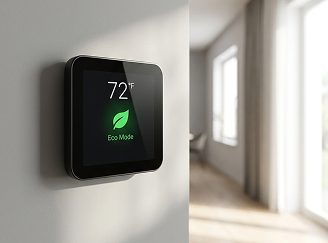
In an era where energy costs are rising and environmental consciousness is at an all-time high, homeowners are looking for ways to make their spaces more efficient without sacrificing comfort. The answer isn’t just in better insulation or newer appliances, it’s in intelligence.
A comprehensive home automation solution does more than just offer convenience; it acts as a digital brain for your house, ensuring that not a single watt of electricity is wasted. Here is how integrating smart technology can significantly lower your monthly utility bills.
1. Precision Climate Control
Heating and cooling typically account for the largest portion of a home’s energy consumption. Traditional thermostats rely on manual adjustments, which often lead to systems running in empty rooms.
With a smart home automation solution, your HVAC system becomes proactive rather than reactive:
Adaptive Scheduling: Your home learns your routine, lowering the AC or heat when you leave for work and returning it to a comfortable level just before you arrive.
Zoning: Instead of cooling the entire house, smart dampers can direct airflow only to the rooms currently in use.
Sensor-Driven Adjustments: Occupancy sensors detect when a room is empty and signal the system to scale back, saving energy effortlessly.
2. Intelligent Lighting Management
How many times have lights been left on in a hallway or bathroom? Smart lighting eliminates this common drain on your wallet. By using motion sensors and “Away” modes, you can ensure that lights are only active when needed.
Furthermore, daylight harvesting is a game-changer. Smart sensors measure the amount of natural light entering a room and automatically dim the artificial lights to maintain a consistent brightness level, maximizing the use of free, natural sunlight.
3. Eliminating “Vampire” Power Draw
Many electronics, televisions, gaming consoles, and kitchen appliances draw power even when they are turned off. This is known as standby power or “vampire” energy.
By plugging these devices into smart outlets integrated into your home automation solution, you can completely cut power to these devices during the night or while you are away. You can even monitor real-time energy usage through an app to identify which appliances are the biggest culprits of energy waste.
4. Motorized Shading and Thermal Gain
Windows are a major source of heat gain in the summer and heat loss in the winter. Automated shades can be programmed to respond to the sun’s position:
In Summer: Shades close during the hottest part of the day to block solar heat, reducing the load on your air conditioner.
In Winter: Shades open during sunny hours to naturally warm your home, then close at night to provide an extra layer of insulation.
The Bottom Line: ROI Through Efficiency
Investing in a home automation solution is no longer just a luxury—it’s a strategic financial move. While there is an upfront cost for the hardware and installation, the long-term savings on energy bills provide a tangible return on investment.
By taking the guesswork out of energy management, smart technology allows you to live more comfortably while leaving a smaller footprint on the planet and your bank account.